The Daddy Diary
Musings on Babies, Bulldogs, and Beer
The Cuteness Scale
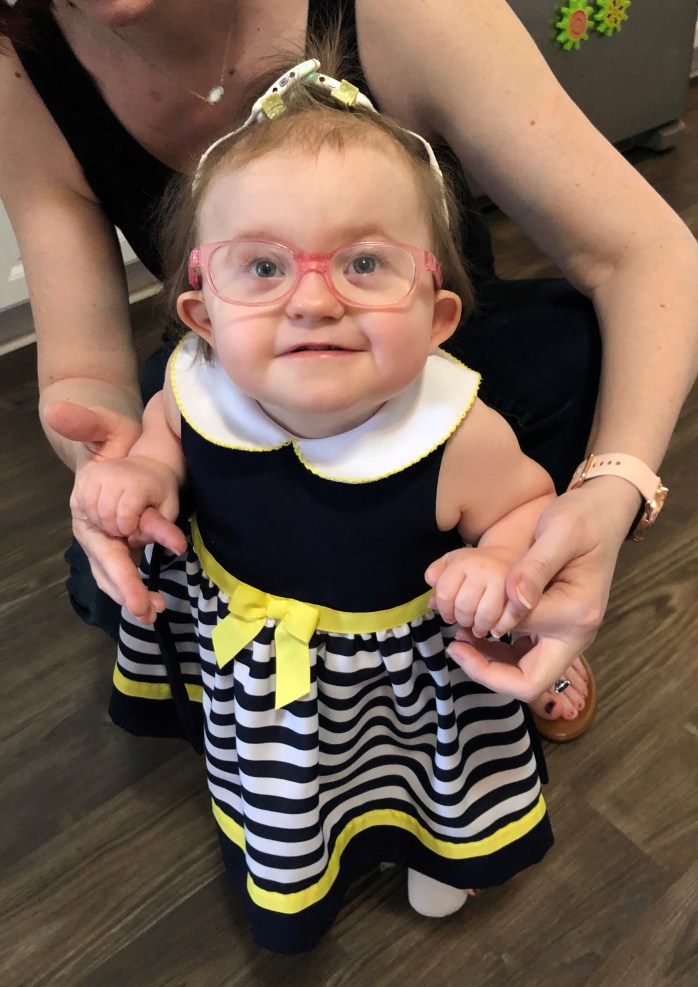
During a routine visit to one of Audrey’s doctors yesterday, the nurse said, “I know you’ve heard this before, but she is the cutest baby I’ve ever seen.” I told her that I already knew that and that even though I am biased, her observation is correct. Now, I realize that Audrey technically isn’t a baby anymore because she is three years old, but she is quite tiny for a child her age. I guess that is one advantage of having a child with CHARGE Syndrome – because they are delayed with many aspects of their development, we get to hold on to those baby years a lot longer than most parents. Regardless of whether she is technically a baby or not, the point is that Audrey’s cuteness is off the charts.
But wait, what charts?
The conversation with the nurse reminded me of something I wrote after Ella was born. During the first month after Ella was born, I learned that there is practically an entire academic discipline devoted to measuring babies. It seems like a pediatric obsession that begins about five seconds after birth. We measure birth weight, discharge weight, length, head circumference, and APGAR. That stands for Appearance, Pulse, Grimace, Activity, and Respiration. We actually have a measurement for a baby’s grimace. The APGAR has to be so precise that they measure the baby one minute after birth, and then five minutes after birth. That seemed a little excessive to me. Other than changing color thirty-seven times, how much can a baby really change in four minutes? By the way, Ella got a solid eight on the APGAR scale. It should have been a 10, but the Hungarian judge screwed her on her Respiration score.
Also, I have noticed that everything about babies has to be measured as a percentile because as a society, we find it very important to compare our babies against every other baby ever born. I would later learn that we carry this practice out well into a child’s life because it seemed to come up at every visit to the pediatrician. I think we use this framework so that every parent would have at least one thing to brag about. If your baby is not the biggest or longest or does not have the biggest head, you can say, “My baby is in the 97% percentile for fingernail density.”
I am not a sociologist, but I am assuming that in most societies, staring at a girl for nine straight hours is frowned upon. I spent about that long staring at Ella the first full day we got her home from the hospital. It seems much less creepy when the object is your own daughter, which is a good thing because I just couldn’t stop. She just looked so perfect that I could not believe she was mine. I know that all parents think their baby is the cutest, but that simply is not possible. One baby has to be the cutest, and it was mine.
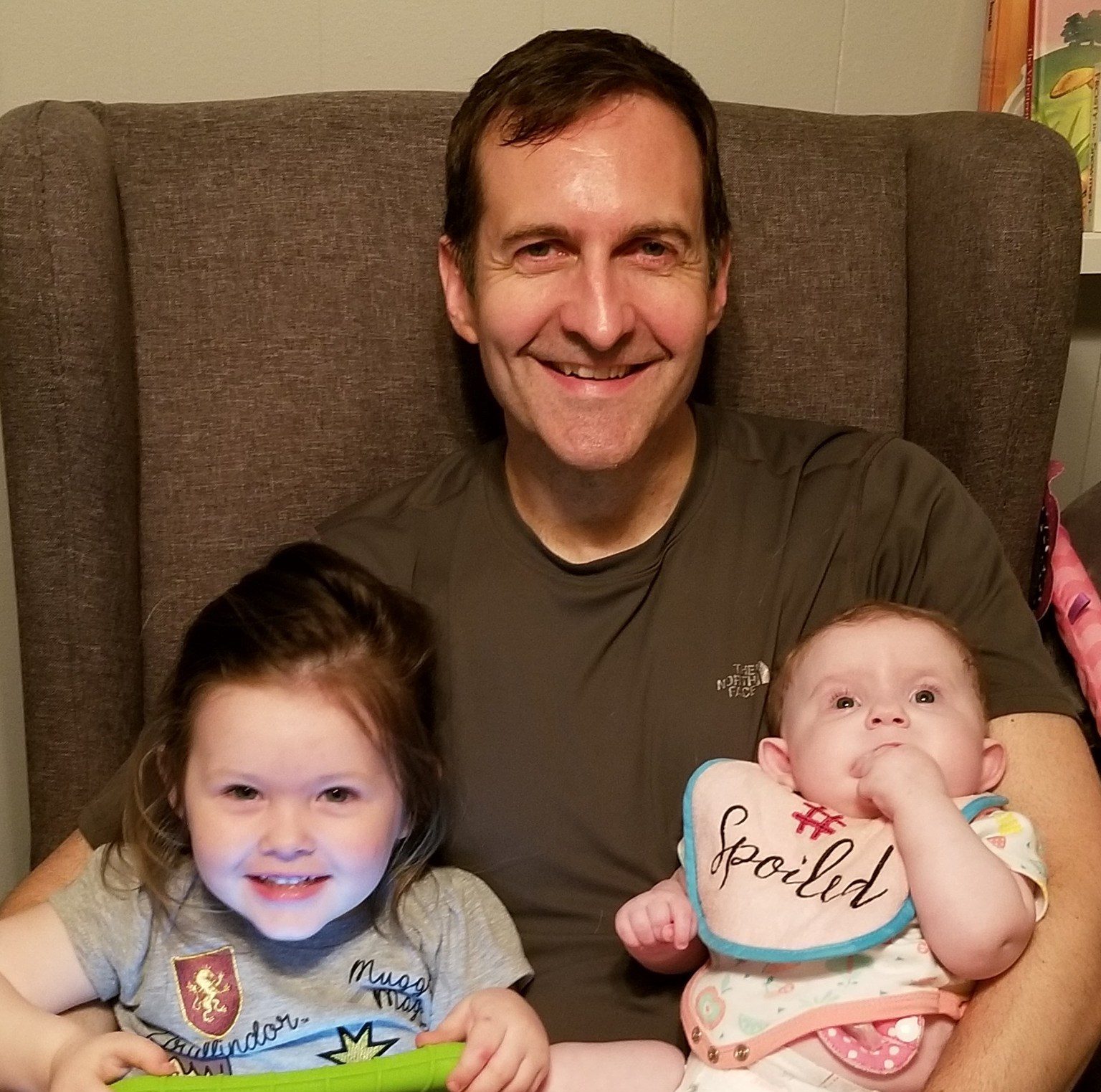
After staring at Ella for the greater part of a day, it occurred to me that we do not measure the most important feature of babies, cuteness. Currently, there is not a scientific unit of measure for cuteness. I proposed at the time that we start measuring cuteness, and the unit of measure will be called an Ella. For those reading this in countries that use the metric system, we will use Ellameters. As a frame of reference, the baby on jars of Gerber baby food would be about 30 Ellas. That is a solid score. Using that scale, my baby girls would be 6.02×10²³ Ellas.
Feel free to apply this scale to puppies and kittens as well. The influence of my daughters’ cuteness should not be limited to just one species.


 The Daddy Diary