The Daddy Diary
Musings on Babies, Bulldogs, and Beer
A Corner Piece
Theodicy isn’t an epic poem by Homer. Theodicy is a philosophy that tries to justify the existence of an all-loving God in a world of evil and pain. It attempts to answer the question, “Why do bad things happen to good people?”
It’s a question I’ve been pondering for a long time, especially during the last five years. I’ve been asked so many times, “Why did God do this to Audrey?” (Hint: He didn’t, at least not directly, but that will be covered in a later blog post).
Ella is just about at the point where she is about to realize that her daddy is an idiot. At the age of four, she began asking questions like “Is ketchup a non-Newtonian fluid?” And the questions only got harder from there. So, I started watching Neil DeGrasse Tyson videos online just so I could have at least a talking point or two to answer her scientific questions. Someday she will learn that her daddy is an idiot, but I’m trying to hold that off until at least Junior High. I hope Neil can help.
In one of the videos, Neil mentioned that he cannot believe there is a God who is all-powerful and all-good because all you have to do is look at natural disasters to realize that if there is a God, he couldn’t be all good. He has a point. He asked why people have to die because of volcanoes and disease and why some people have birth defects. Ok, that one hit close to home. Surely, an all-powerful God could have created a world without any of those things that cause pain and suffering.
Maybe God’s definition of “all good” is different from ours. Maybe we see “all good” as meaning that nothing bad happens, but would that be the best possible world? Maybe a greater good can come out of all those bad things.
When I see the world, some of the best things I see in people are compassion and forgiveness. I see people willing to help those in need and protect those who cannot protect themselves. But here’s the deal, those good things don’t come without pain.
There’s no compassion unless someone is suffering. There’s no forgiveness unless someone is hurt. There’s no willingness to help unless there are people in need. There’s no protection unless there is a danger to be protected from.
Our church has a little indoor play area for the kids, and we let Ella play there for 10 (although she always asks for 15) minutes after church. She usually finds a couple of friends and they play tag and chase each other around the obstacles and down the slides.
At church last Sunday, @koryknott had just delivered a sermon on Theodicy. After the service, I walked Ella to the playground, and instead of following her friends, she saw a little boy and walked over to him. He was about 18 months old and scared to climb on the equipment. Ella got on her knees and talked to him, and then she took his hand, walked him to the play equipment, and stayed with him the entire time.
As we were leaving, the boy’s mother said, “Your daughter is so amazing. She was so sweet and protective of my son.”
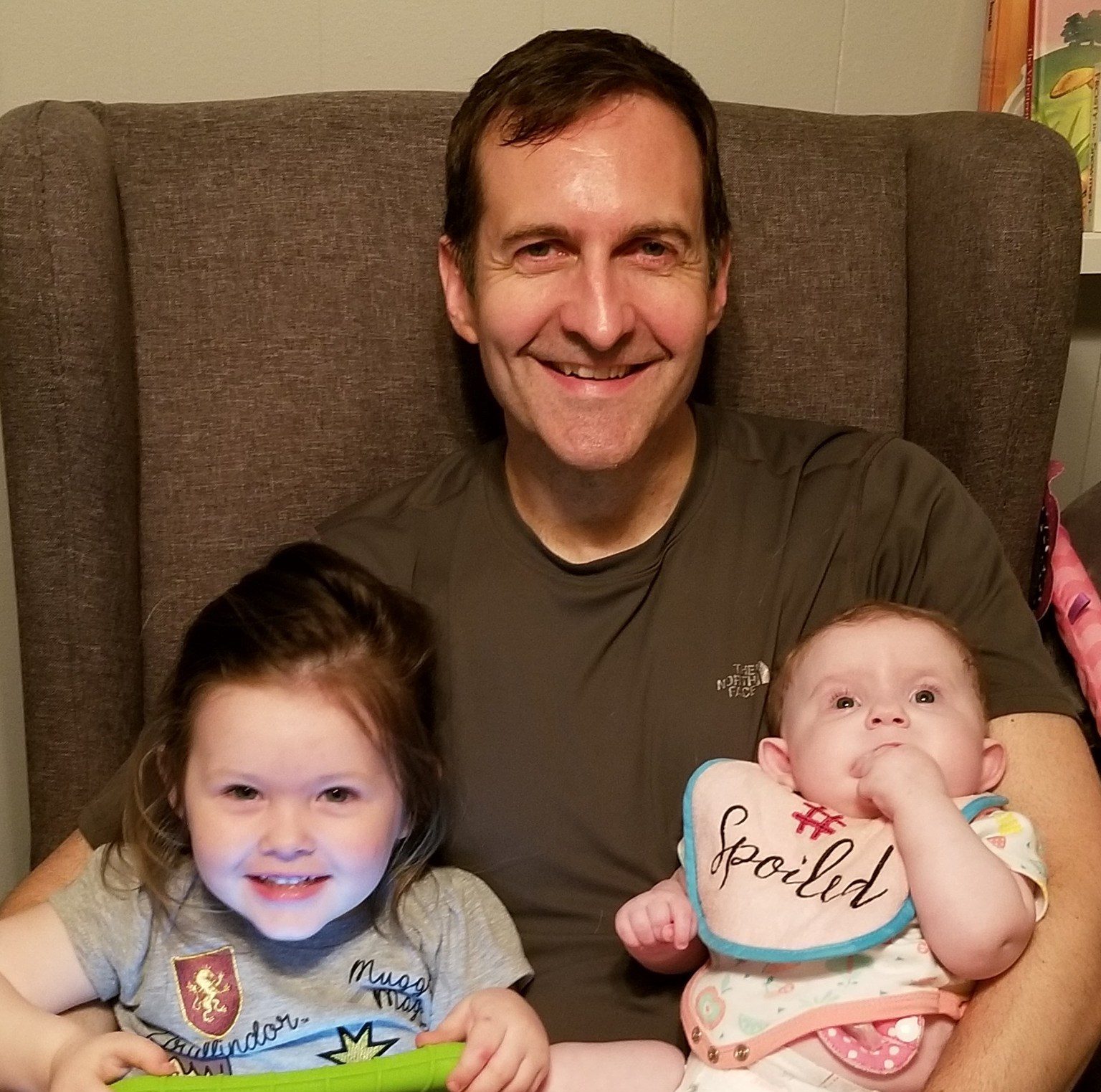
She is right about Ella. She is the sweetest, most compassionate little kid, and I know why. It is because she is Audrey’s sister.
I don’t know why some people have to suffer and others seem to skate through life unblemished. I don’t know why Audrey has multiple disabilities and most people have none. But how do you build character without going through trials? How do you show compassion unless someone else is suffering? How do you protect someone unless they need protection?
So, I would tell @neildegrassetyson, that I haven’t solved this puzzle yet, but I think I just found a corner piece. I know this – you do not get the complete goodness of Ella without Audrey.
3 Comments on “A Corner Piece”
Leave a comment
 The Daddy Diary
Andy, This is one of the best answers to Theodicy. Instead of leaving with a sense of not having an answer—you have the best answer.
Cynthia Curney Cancienne
>
LikeLike
This is so very true.
LikeLike
God’s heart smiles – thank you and Ella for reminding each of us – at any age – to ‘reach out and touch’………just like Jesus did and wants us to do..
LikeLike